


As part of regular interaction with farmers, the Blueweight team gathered a remarkable case from Mr. Nagamalleswar Rao — a shrimp farmer from Pallevada Village, Krishna District, AP— who encountered a severe Microcystis bloom at DOC 35 and resolved it completely using Blueweight's biological treatment.
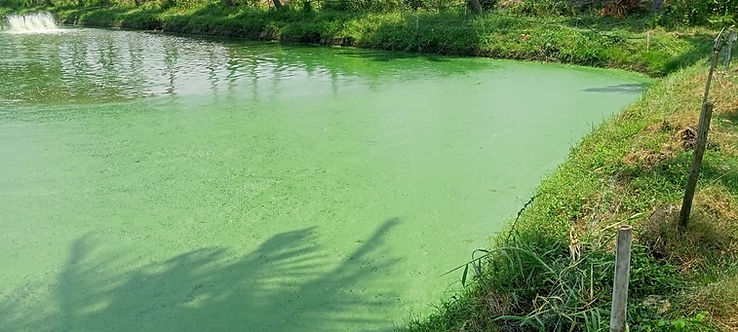
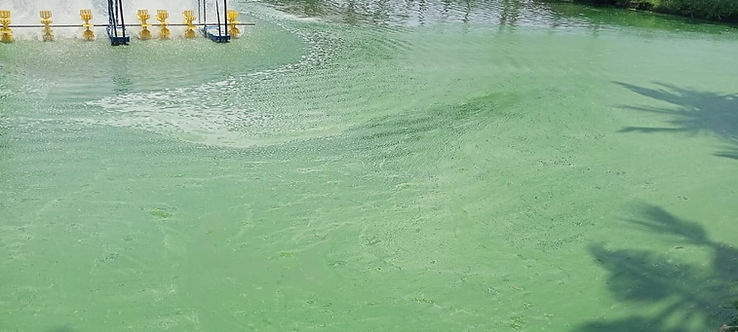
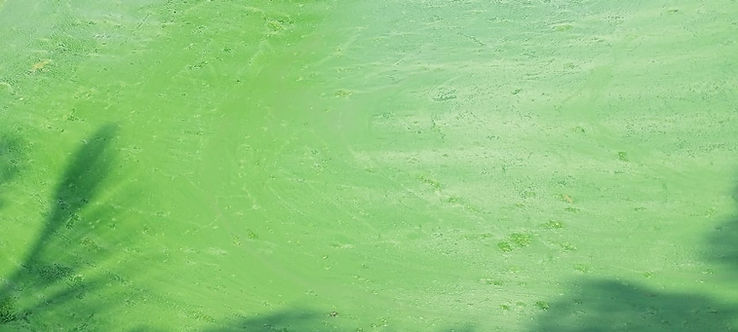
The situation started when his pond water turned an unmistakable bright green. The surface was covered — what looked almost like paint had been poured across the water. Dissolved oxygen readings were crashing overnight. Shrimp behaviour was erratic.
Why Microcystis Is So Dangerous
Microcystis aeruginosa is a cyanobacterium — commonly called blue-green algae — that produces microcystins, potent hepatotoxins that directly destroy shrimp hepatopancreas. Farmers who delay action often end up harvesting at DOC 30, losing lakhs in investment. The bloom also causes severe overnight DO crashes, as it consumes oxygen without producing it after dark.
What makes it particularly dangerous is how it looks uninviting and alarming — yet many farmers don't know there's a biological solution. Chemical algaecides cause a mass die-off of algae, releasing toxins all at once and crashing oxygen levels even further. The farmer next door who used a chemical treatment lost 40% of his shrimp that same week.
The Blueweight Diagnosis
Mr. Nagamalleswar Rao, being aware of Blueweight, visited the factory depot at Akividu, West Godavari District — just 8km from his pond. Blueweight's depot head, Mr. Ramesh Y, guided him through the diagnosis.
First, Mr. Ramesh checked the pond pH — it was at 8.4. This was important: if pH exceeds 9.1, any treatment loses effectiveness. He then asked for a complete water parameter report before recommending a protocol. The water parameters confirmed: high phosphorous levels (the primary fuel for Microcystis growth), relatively stable pH, and DO readings that were borderline safe.
The Treatment: Cyano Pro
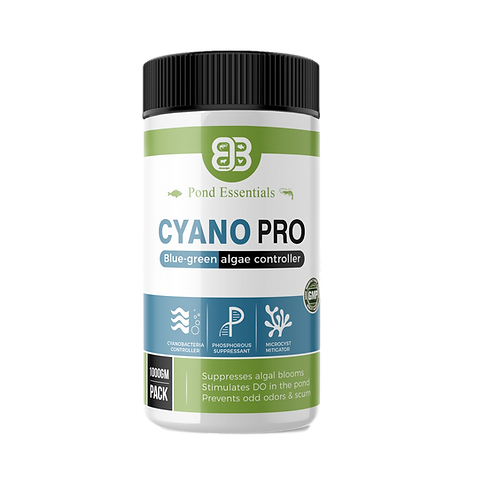
Mr. Ramesh recommended Cyano Pro— Blueweight's specially cultured Bacillus-based biological controller that works by breaking down the phosphorous that feeds Microcystis growth, causing the bloom to naturally recede without an oxygen-crash event.
Protocol: Apply 500g/acre at 8am (before peak sunlight). Mix with a large volume of pond water before application. A second dose of 500g/acre after 5 days. No bore water input during this period. Minimise mineral application for 5 days to restrict phosphorous entry.
The Result — Day 7
By the second dose on Day 5, the pond colour had begun to shift. The dense green carpet was breaking up. By Day 7 — the bloom was completely solved. The pond restored its natural brown-green plankton colour. DO levels stabilised. Shrimp behaviour returned to normal.
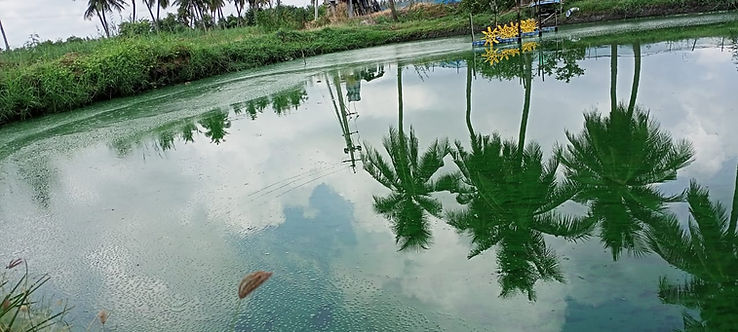
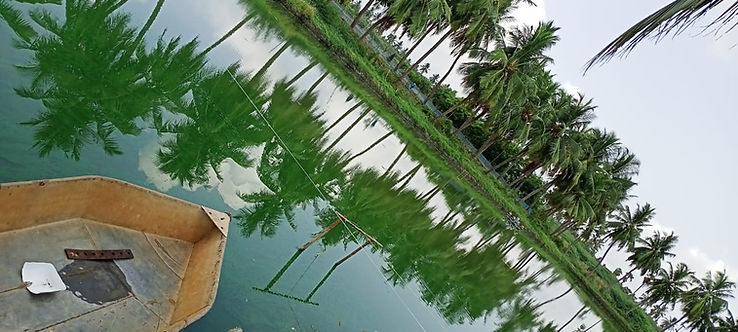
“After seeing the above scenes, I felt very bad — it was very uninviting to visit the pond daily. But Blueweight guided me step by step. An organic action of a powerful probiotic is a boon to aquaculture.”
Key Takeaways for Farmers
- ✦Check pH first. Above 9.1, no treatment works effectively. Confirm parameters before applying anything.
- ✦Do not use chemical algaecides. Mass die-off releases toxins and crashes DO — the cure becomes worse than the disease.
- ✦Restrict phosphorous input during treatment — no bore water, minimal minerals for 5 days.
- ✦Apply at 8am, before peak sunlight activates algae growth.
- ✦Completely solved in 7 days with a biological approach — no crash, no stress, pond ecosystem preserved.
Microcystis doesn't have to mean harvest loss. With the right biological tool and proper guidance, it can be resolved safely — and your crop protected to full harvest size.
#shrimpculture #vannamei #microcystis #bluegreenalgae #aquaculture #blueweight